
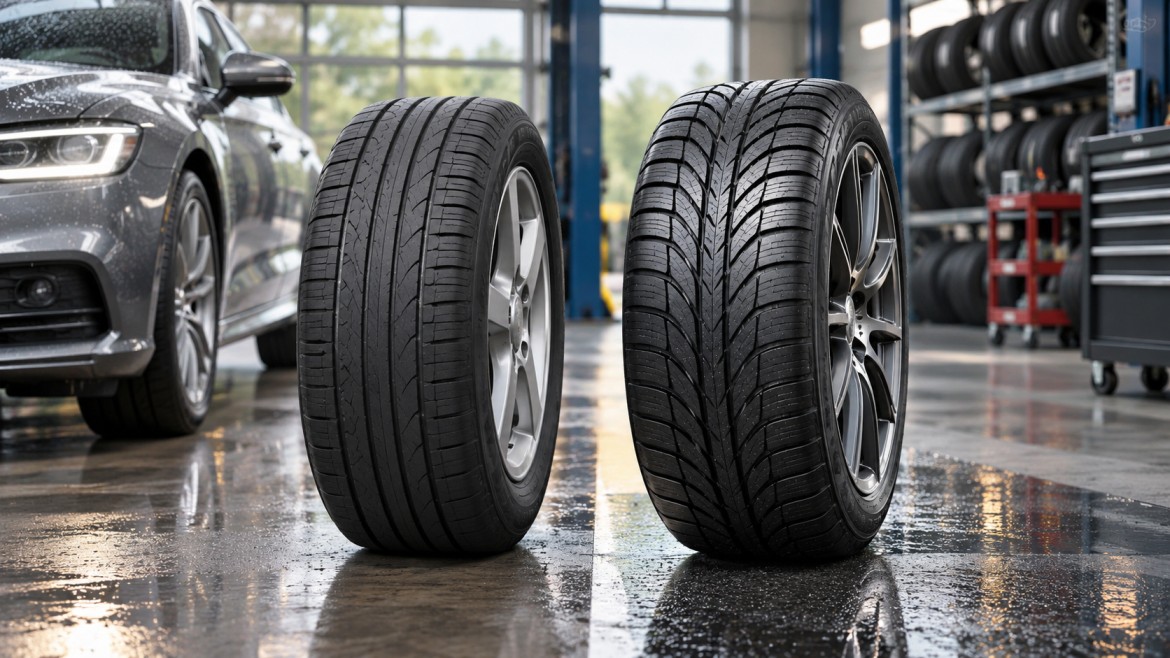
Buying new tyres is often a decision driven by price, especially when replacing all four at once. Many drivers choose cheaper options to reduce their immediate expenses, while others prefer premium tyres for their performance and durability. However, the difference between cheap and premium tyres goes beyond the price tag. The right choice can influence driving comfort, safety, fuel consumption and how frequently replacements are needed. For motorists looking for Mechanics in Dandenong or arranging a Car Service Dandenong, understanding these differences can help avoid unnecessary expenses. Continental Tyres Dandenong offers tyre options for different vehicles, driving conditions and budgets, making it easier to find a suitable match.
Understanding the Difference Between Cheap and Premium Tyres
Cheap tyres, commonly called budget tyres, are designed to provide basic driving performance at a more affordable price. They are generally suitable for drivers who want a practical option without spending too much upfront.
Premium tyres are usually developed with more extensive research, testing and specialised materials. Manufacturers may focus on improving wet-road grip, handling, braking performance, noise levels and rolling resistance.
However, not every expensive tyre is automatically better for every vehicle. Some budget tyres perform well in everyday driving, while certain premium models are designed for specific conditions or performance requirements.
The real difference becomes clearer when considering how tyres behave over thousands of kilometres rather than comparing their initial purchase prices alone.
A sensible purchase involves checking tyre specifications, independent test results, vehicle requirements and expected driving conditions.
The Hidden Costs of Choosing the Cheapest Tyres
Saving money on tyres can feel like a good decision, particularly when household expenses are increasing. However, the lowest purchase price does not always result in the lowest overall cost.
Certain inexpensive tyres may wear more quickly than higher-quality alternatives, depending on their construction, rubber compound and driving conditions. This could mean replacing them sooner than expected.
For example, consider two hypothetical tyre options:
- Budget tyres cost $100 each and last 30,000 kilometres.
- Premium tyres cost $180 each and last 60,000 kilometres.
For a complete set of four, the budget option costs $400, while the premium option costs $720.
Over 60,000 kilometres, a driver might need two sets of budget tyres, costing $800, compared with one set of premium tyres costing $720.
In this example, the premium option saves $80 on tyre purchases alone, before considering fitting costs. These figures are illustrative, not actual prices or guaranteed tyre lifespans.
Actual results vary significantly between tyre models, vehicles and driving habits. Some budget tyres may last longer than certain premium alternatives.
Comparing the cost per kilometre provides a more useful picture than simply looking at the amount printed on the price tag.
Wet Weather Performance Can Make a Big Difference
Melbourne’s changing weather means motorists regularly encounter dry roads, heavy rain and slippery surfaces.
Tyres play an important role in maintaining contact with the road, particularly during braking and cornering.
Premium tyre manufacturers often invest in tread designs and rubber compounds intended to improve wet-road performance. Some models are engineered to disperse water efficiently and maintain traction in challenging conditions.
Budget tyres can also provide suitable wet-weather performance, but results vary considerably between individual products.
A tyre with poor wet grip may require a longer distance to stop on a wet road than a better-performing alternative under comparable conditions.
This difference can become important during unexpected situations, such as sudden braking at an intersection or slowing down on a rain-soaked highway.
Drivers should consider independent wet-braking test results rather than relying only on brand reputation or price.
Maintaining adequate tread depth and correct tyre pressure is equally important, regardless of the tyre category selected.
Tyre Lifespan: Paying Less Today Could Mean Buying Again Sooner
Tyre durability depends on several factors, including rubber composition, tread design, wheel positioning, road conditions and driving habits.
Some premium touring tyres are designed to deliver a balance of durability, comfort and consistent performance over extended use.
Certain budget alternatives may have shorter usable lifespans, although this is not always the case.
Drivers who frequently travel between Dandenong, Melbourne CBD, Berwick, Cranbourne and surrounding suburbs can accumulate considerable kilometres throughout the year.
For these motorists, choosing tyres with suitable wear characteristics may reduce the frequency of replacement.
However, even expensive tyres can wear prematurely when exposed to incorrect inflation, aggressive driving or suspension problems.
Regular tyre inspections, rotation where appropriate and proper wheel alignment can help reduce uneven wear and make better use of the available tread.
A well-maintained mid-range tyre may ultimately offer better value than a premium product that receives little maintenance.
Fuel Efficiency Is Another Factor Worth Considering
Tyres affect how much energy a vehicle needs to move along the road.
Rolling resistance refers to the energy lost as a tyre rolls under the vehicle’s weight. Tyres with lower rolling resistance can help reduce fuel consumption under suitable conditions.
Some premium tyres use specialised construction techniques and compounds to lower rolling resistance without sacrificing other important performance characteristics.
However, budget and mid-range tyres can also offer good fuel efficiency. The result depends on the individual model rather than its price category alone.
For drivers travelling long distances regularly, even a modest difference in fuel consumption can add up over time.
Tyre pressure also affects rolling resistance. Underinflated tyres can increase fuel consumption and contribute to excessive heat and irregular wear.
Checking the recommended pressure when the tyres are cold is a simple maintenance habit that helps support efficiency and tyre life.
Drivers should follow the vehicle manufacturer’s recommended pressures rather than assuming that a higher pressure always improves fuel economy.
Driving Comfort and Road Noise Matter More Than Expected
Tyres influence how a vehicle feels on the road.
Some tyres produce noticeable road noise, particularly on coarse road surfaces or at highway speeds. Others are designed to provide a quieter and smoother driving experience.
Premium touring tyres often feature tread patterns and construction methods intended to reduce vibration and noise.
This can make a difference for people who spend considerable time commuting or travelling with family members.
A quieter cabin may reduce driving fatigue on longer journeys, while suitable tyre construction can help absorb minor road imperfections.
However, tyre size, sidewall design, vehicle suspension and road conditions also influence comfort.
A premium performance tyre with a low-profile design may deliver sharper handling but feel firmer than a less expensive touring tyre.
Comfort should therefore be considered alongside the type of vehicle and the owner’s driving preferences.
Choosing Tyres Based on Your Driving Habits
A tyre that works well for one driver may not be the best choice for another.
Someone who travels only short distances around Dandenong may have different requirements from a driver who regularly uses the Monash Freeway or travels across regional Victoria.
Everyday City Driving
Drivers who mainly use suburban roads may prefer tyres that offer predictable handling, comfortable driving and reasonable durability.
A quality budget or mid-range tyre may meet these needs without requiring a premium purchase.
Regular Highway Travel
Frequent highway drivers may benefit from tyres with good wet-road braking performance, stable handling and low road noise.
Tyre durability and fuel efficiency can also become more important when covering higher annual kilometres.
Family SUVs and Larger Vehicles
SUVs often require tyres with appropriate load ratings and construction suited to the vehicle’s weight.
Choosing the correct size, load capacity and speed rating is essential. Purchasing tyres based only on price can result in an unsuitable selection.
Performance Vehicles
Sports cars and higher-performance vehicles may require tyres designed to provide stronger cornering grip, responsive steering and controlled braking.
Replacing specialised tyres with cheaper alternatives that do not meet the vehicle’s requirements can compromise intended performance.
For every vehicle type, the manufacturer’s tyre specifications should guide the final decision.
Maintenance Has a Bigger Impact Than Many Drivers Realise
Buying good tyres is only part of maintaining a vehicle.
Tyres operate alongside the brakes, steering, suspension and other mechanical components. Problems in these systems can affect tyre wear and vehicle handling.
For example, worn suspension components may cause irregular contact between a tyre and the road. Poorly adjusted wheel angles can create excessive wear along one edge of the tread.
Regular vehicle inspections can help identify these problems before they cause additional expenses.
Scheduled maintenance, including a Logbook Service, provides an opportunity to assess general vehicle condition and identify issues that may need attention.
Drivers should also pay attention to changes in braking behaviour. Professional brake repairs may be necessary when components become worn or damaged, as tyre grip alone cannot compensate for a faulty braking system.
Similarly, vehicles experiencing difficulty changing gears, clutch slipping or unusual drivetrain vibrations may need an inspection. Services such as clutch repairs Dandenong address mechanical concerns that are separate from tyre replacement.
Looking after the complete vehicle helps ensure that money spent on new tyres is not wasted through preventable mechanical problems.
Premium Tyres Are Not Always the Most Expensive Option Over Time
A higher purchase price can make premium tyres seem less attractive initially.
However, the overall value depends on how well the tyres perform during their usable lifespan.
A premium tyre may justify its cost when it offers suitable durability, reliable wet-weather performance and comfort for the driver’s needs.
On the other hand, purchasing an expensive high-performance tyre for a vehicle used mainly on short suburban trips may offer limited practical benefit.
The best choice is not necessarily the cheapest or the most expensive product.
For many motorists, reputable mid-range tyres offer a useful balance between affordability and everyday performance.
Comparing tyres within the same size and intended use is important. An economy touring tyre should not be assessed in exactly the same way as a performance tyre designed for different driving conditions.
Drivers should also consider warranty terms, treadwear characteristics, tyre age and the availability of future replacements.
These details can make a noticeable difference to long-term ownership costs.
Important Things to Check Before Buying New Tyres
Tyre shopping becomes easier when drivers know which details matter.
Before making a purchase, consider the following:
- Correct tyre size: Check the vehicle’s tyre placard or owner’s manual to confirm the required dimensions.
- Load and speed ratings: Ensure replacement tyres meet the vehicle manufacturer’s requirements.
- Wet-road grip: Look for reliable product information or independent testing relevant to the exact tyre model.
- Expected durability: Consider the tyre’s intended use and wear characteristics rather than relying on price alone.
- Driving comfort: Think about road noise, ride quality and how frequently the vehicle travels long distances.
- Total fitted price: Check whether fitting, balancing, valves and disposal fees are included in the quote.
- Vehicle condition: Have unusual tyre wear or steering problems investigated before fitting a new set.
These checks can help motorists make a more informed decision and avoid purchasing unsuitable products.
Professional advice can be particularly useful when comparing several brands with similar specifications.
Common Mistakes That Reduce the Life of New Tyres
Even good-quality tyres can deteriorate faster than expected when maintenance is neglected.
One common mistake is driving with incorrect tyre pressure. Both underinflation and overinflation can contribute to uneven wear and affect handling.
Another is ignoring early signs of alignment or suspension problems. A vehicle pulling to one side or developing unusual tread wear may need mechanical attention.
Repeatedly driving over potholes or striking kerbs can also damage tyres, wheels and suspension components.
Some motorists continue using tyres after the tread has become excessively worn. In Victoria, passenger vehicle tyres must generally have at least 1.5 mm of tread depth across the required tread area, but replacement may be advisable earlier depending on tyre condition and wet-weather performance.
Mixing incompatible tyre types or fitting incorrect specifications can also create handling concerns.
Regularly checking the tyres for cracks, bulges, punctures and uneven wear helps identify potential problems before they become serious.
Good maintenance practices are valuable regardless of whether the tyres were inexpensive or premium-priced.
Getting Better Value From Your Next Set of Tyres
The tyre market offers a wide selection of products at different price points.
Budget tyres can be suitable for motorists who need an affordable replacement and can find a model that meets their vehicle’s requirements.
Mid-range tyres may provide a strong balance between purchase price, comfort and durability.
Premium tyres can be worthwhile for drivers who place greater importance on particular performance characteristics or frequently travel in demanding conditions.
The most practical approach is to compare the total ownership cost, not just the initial purchase.
This includes the expected lifespan, potential fuel efficiency, fitting expenses and the maintenance required to keep the tyres performing properly.
Professional tyre sales advice can help drivers compare suitable options without paying for features they may not need.
Selecting tyres that match the vehicle and driving conditions is often more valuable than choosing a product based entirely on its brand name or promotional discount.
Choose Value Over the Lowest Price
Cheap tyres can reduce immediate expenses, but they are not always the most economical choice over the long term. Premium tyres may offer benefits in durability, handling, braking and comfort, although these advantages depend on the individual tyre model and how it is used.
The key is finding a product that meets your vehicle’s specifications, performs reliably in local driving conditions and provides reasonable value throughout its lifespan.
For drivers in Dandenong, Keysborough, Noble Park, Hallam, Springvale and surrounding suburbs, Continental Tyres Dandenong provides a range of budget, mid-range and premium tyre options, along with fitting, balancing and automotive services.
Visit the workshop at 20 Plunkett Road, Dandenong VIC 3175, or call 03 9791 8841 to discuss suitable tyres for your vehicle.